

What to Pack for South Korea in Winter
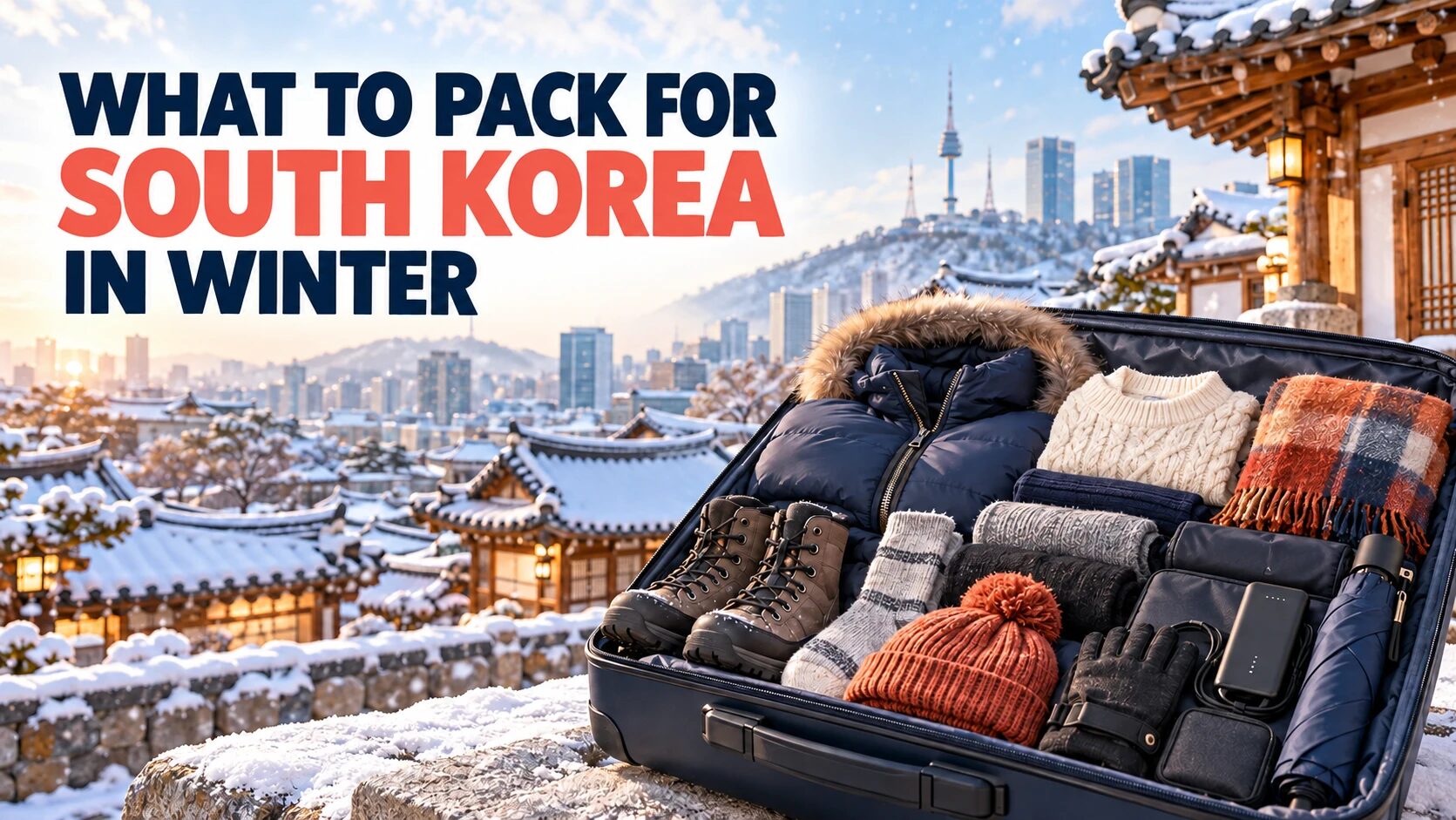
What to pack for South Korea in winter comes down to one thing: being warm outside and not overheating inside. Seoul in January is properly cold — dry, windy, and regularly below freezing — but the subway, cafés, and department stores are heated so well that you'll be peeling off layers every time you walk through a door.
This guide covers exactly that: what to wear for Seoul versus milder Busan, which shoes work on icy sidewalks, what to buy once you land, and a few winter-specific items most packing lists skip. If you want the year-round basics (adapters, deodorant, apps), my guide on what to pack for South Korea year-round covers those in detail.
How Cold Does It Actually Get?
Korea's winter runs roughly from December to February, with January as the coldest month. The temperatures vary more by region than many first-timers expect.
| City / Region | Typical January Day | Typical January Night | Notes |
|---|---|---|---|
| Seoul | 0–2°C (32–36°F) | -5 to -10°C (14–23°F) | Dry, windy; occasional cold snaps well below -10°C |
| Busan | 7–9°C (45–48°F) | around 0°C (32°F) | Milder and sunny; snow is rare |
| Gangwon (ski areas) | below freezing | -10°C (14°F) and colder | Mountains, real snow |
| Jeju | 8–10°C (46–50°F) | 3–5°C (37–41°F) | Mild but windy and often grey |
My tip: The number on the forecast isn't the whole story. The wind along the Han River and between the high-rises makes Seoul feel colder than it reads. Check the "feels like" temperature before you decide what to wear.
Expect Sudden Swings
The table shows averages, but Korean weather doesn't always follow them. When I spent three weeks in Korea from late November to early December 2022, I started in Busan, where it was still warm — around 20°C (68°F). A few days later in Seoul, it was below freezing. If I'd only packed for the forecast I saw before leaving, I would have been either too warm or freezing.
That's why I now pack for every condition, not just the average: one or two lighter tops for mild days, plus the full winter layers below. This matters most at the start and end of the season — exactly the late-November-to-early-December window I traveled in, and again in March — when the weather can still go either way.
The Layering System That Works in Seoul
The trick in Korea is that you're switching between very cold and very warm all day. A single giant sweater under a coat doesn't work — you'll be sweating on the subway. Thin layers you can remove one by one are better.
Base Layer
- 2–3 thermal tops (merino or synthetic like Uniqlo Heattech)
- 1–2 pairs of thermal leggings to wear under trousers on the coldest days
Thermals are the biggest difference between a miserable day and a comfortable one. They're also light and take almost no space in your bag.
Mid Layer
- 3–4 sweaters, fleeces, or cardigans — something you can carry or tie around your bag when you're inside
- 2 pairs of warm trousers — thick jeans are fine with thermals underneath; fleece-lined trousers are even better
Outer Layer
- One warm, wind-resistant coat. The long padded coats you'll see everywhere in Seoul (Koreans call them "long padding") are popular for a reason: they cover your thighs, which makes a huge difference when you're waiting at a bus stop.
- If you don't own one, a shorter down jacket plus thermal leggings works too.
My tip: Choose a coat with a hood and deep pockets. Umbrellas don't do much in Seoul's winter wind, and you'll want somewhere to put your gloves when you need your phone for Naver Map.
Accessories
- Warm hat that covers your ears
- Gloves — ideally touchscreen-compatible, because you'll use your phone constantly
- Scarf or neck gaiter
- Wool socks (4–5 pairs)
Shoes: Grip Matters More Than Style
You'll walk a lot in Seoul — 15,000–20,000 steps a day is normal. In winter, add frozen puddles and occasionally slippery stairs at palace grounds and markets.
- Main pair: Waterproof boots or sneakers with a good grip, already broken in. Leave room for thick socks.
- Second pair: Something easy to slip on and off. Many traditional restaurants and some guesthouses still ask you to take your shoes off, and unlacing high boots five times a day gets old.
You don't need proper snow boots unless you're going skiing or hiking in the mountains. City streets in Seoul and Busan are usually cleared quickly after snowfall.
What I learned the hard way: During my three weeks in Korea, I went hiking in Busan and got a blister on my foot. I had to find a pharmacy (약국, yakguk) to buy a bandage. It was easy to sort out — pharmacies are everywhere — but it would have been easier with blister plasters already in my bag. Busan's hiking trails are hillier than they look on the map, so if you plan to hike, wear shoes you've already walked in for a while and pack a few blister plasters from home.
Seoul vs. Busan: Pack Differently
If your trip covers both cities, you don't need two wardrobes — but you can go lighter on the Busan days.
Seoul: Full layering system. Thermals, warm coat, hat, and gloves daily from late December to mid-February.
Busan: Usually a jacket and a sweater are enough during the day. It's sunny and noticeably milder, and walks along Haeundae Beach in winter are actually pleasant. Evenings near the water get chilly, so keep the hat and gloves in your bag.
My experience: On my trip I went from Busan to Seoul, and the difference was bigger than I expected — warm enough for light layers in Busan, freezing in Seoul. If you're doing the same route, pack your warm layers at the top of your bag so you can reach them without unpacking everything on arrival.
If you're still confused about the city's name, I've covered that too: Busan vs. Pusan.
Winter-Specific Items Most Lists Forget
Hand Warmers (Hot Packs)
Disposable hand warmers — called 핫팩 (hot packs) — are sold at every GS25, CU, and 7-Eleven for very little. You don't need to bring them from home. Keep one in your coat pocket on cold days; they last for hours.
They're also part of the culture. When I went to a soccer game in Seoul one evening, it was properly cold in the stands — and some local fans next to me simply handed me a hand warmer. Sharing them is common, and it was one of my favorite small moments of the trip. If you're going to an evening game or any outdoor event, buy a few extra and pass them on.
Skincare and Lip Balm for Dry Air
Korean winter air is very dry, and heated indoor air makes it worse. Bring lip balm and a rich moisturizer, or buy them at Olive Young once you land — Korean skincare is excellent and usually cheaper than at home. Hand cream is worth having in your day bag.
A Mask for Fine Dust Days
Some winter days have high fine dust (미세먼지) levels, particularly when the air is still. Locals check the air quality app and wear a KF94 mask on bad days. You can buy KF94 masks at any convenience store or pharmacy, so there's no need to pack them, but it's good to know the term.
A Tote or Packable Bag for Layers
When you go into a heated museum or department store, your hat, scarf, and gloves need somewhere to go. A small foldable tote solves that.
A Power Bank
Phone batteries drain faster in the cold — and you'll be using Naver Map, Kakao Taxi, and Papago all day. A compact power bank is worth the space. I've compared a few in my Anker power bank guide.
Day Trips: The DMZ and Other Outdoor Tours
A DMZ tour is one of the most popular day trips from Seoul, and most of it happens outside: observation points, walks between sites, and waiting for the bus. I did a DMZ bus tour on my trip, and I was glad I'd worn my thickest jacket — the open areas near the border are exposed to the wind, and you're outside for longer than you expect.
For outdoor day tours, bring:
- Your warmest coat, not just a mid layer
- Hat and gloves (you'll take photos with cold hands)
- A hot pack or two in your pockets
- Your passport — DMZ tours require it
If You're Going Skiing
Korea has several ski resorts within reach of Seoul, including Vivaldi Park, Elysian Gangchon, and Jisan Forest, plus the larger Yongpyong and High1 in Gangwon Province. Most rent out skis, boards, and full ski suits, so you don't need to fly with ski gear.
What to bring yourself:
- Thermal base layers (you'll have them anyway)
- Ski socks
- Ski gloves (rental gloves are hit or miss)
- Goggles and sunscreen if you have them
- A neck gaiter or balaclava for the lifts
What Not to Pack
- A full skincare routine — buy it at Olive Young
- Hot packs — cheap at every convenience store
- Extra hats and gloves "just in case" — easy and cheap to buy in underground shopping arcades and at Daiso
- A big umbrella — winter precipitation is mostly light snow, and wind makes umbrellas impractical
- Too many thick sweaters — thin layers plus thermals are warmer and take less space
Timing: Seollal and Winter Festivals
Two things to check before booking:
- Seollal (Lunar New Year) falls in late January or February. Many families travel, KTX trains sell out, and some shops and restaurants close for a few days. Palaces and big attractions usually stay open, but plan ahead.
- Winter festivals like the Hwacheon Sancheoneo Ice Festival (ice fishing) usually run in January. If you plan to stand on a frozen river for hours, pack your warmest layers and extra hot packs.
South Korea Winter Packing Checklist
| Category | What to Pack |
|---|---|
| Base layers | 2–3 thermal tops, 1–2 thermal leggings |
| Mid layers | 3–4 sweaters or fleeces, 2 warm trousers |
| Mild days | 1–2 lighter tops — the weather can swing fast |
| Outerwear | 1 warm, wind-resistant coat (long padded ideal) |
| Accessories | Hat, touchscreen gloves, scarf, 4–5 pairs of wool socks |
| Shoes | Waterproof boots/sneakers with grip + 1 slip-on pair |
| Skincare | Lip balm, rich moisturizer, hand cream |
| First aid | Blister plasters (especially if you plan to hike) |
| Tech | Type C/F adapter, power bank, eSIM |
| Buy there | Hot packs, KF94 masks, extra gloves, Korean skincare |
Build Your List Before You Go
I use PackMyTrip to build a list for every trip — you pick your trip type and activities (city, skiing, and so on), and it gives you a starting list you can adjust instead of a blank page. If you're traveling with a partner, you can share the list with a code so you're not both packing three power banks. You can try it free for one trip.
Before you fly, also make sure you've downloaded the essential apps for South Korea and read my Seoul subway guide — the subway is the warmest way to get around in winter.
Have you been to Korea in winter? I'd love to hear whether you found Seoul or Busan the better winter base.
Frequently Asked Questions
How cold is South Korea in winter?
Seoul is the coldest of the main tourist cities. In January, daytime highs often sit around 0–2°C (32–36°F) and nights regularly drop to -5 to -10°C (14–23°F), with colder snaps below that. Busan on the south coast is noticeably milder, with daytime highs around 7–9°C (45–48°F). The mountains in Gangwon Province, where the ski resorts are, are colder than Seoul.
What should I wear in Seoul in winter?
Dress in layers: a thermal base layer, a sweater or fleece, and a warm, wind-resistant coat — ideally a long padded coat that covers your thighs. Add a hat, gloves, scarf, and warm socks. Take off the outer layers when you go inside, because subways, shops, and restaurants are heated well.
Do I need snow boots for South Korea?
Not for city trips. Seoul gets some snow, but streets are usually cleared quickly. Waterproof boots or sneakers with a good grip are enough. Bring proper snow boots only if you're planning a ski trip or hiking in the mountains.
Can I buy winter clothes in South Korea?
Yes. Thermal underwear (Uniqlo Heattech and Korean brands), gloves, hats, and socks are easy to find in Seoul and Busan, often cheaply in underground shopping arcades and at Daiso. Disposable hand warmers (hot packs) are sold at every convenience store. A good coat and broken-in shoes are the things to bring from home.
Is winter a good time to visit South Korea?
It's a good time if you don't mind the cold. Flights and hotels are usually cheaper than in spring and fall, skiing and winter festivals run from December to February, and the skies are often clear. The downsides are short days, fine dust on some days, and Seollal (Lunar New Year), when many shops close and trains sell out.
Post Last Updated