

Packing for a Caribbean Cruise Checklist (2026)
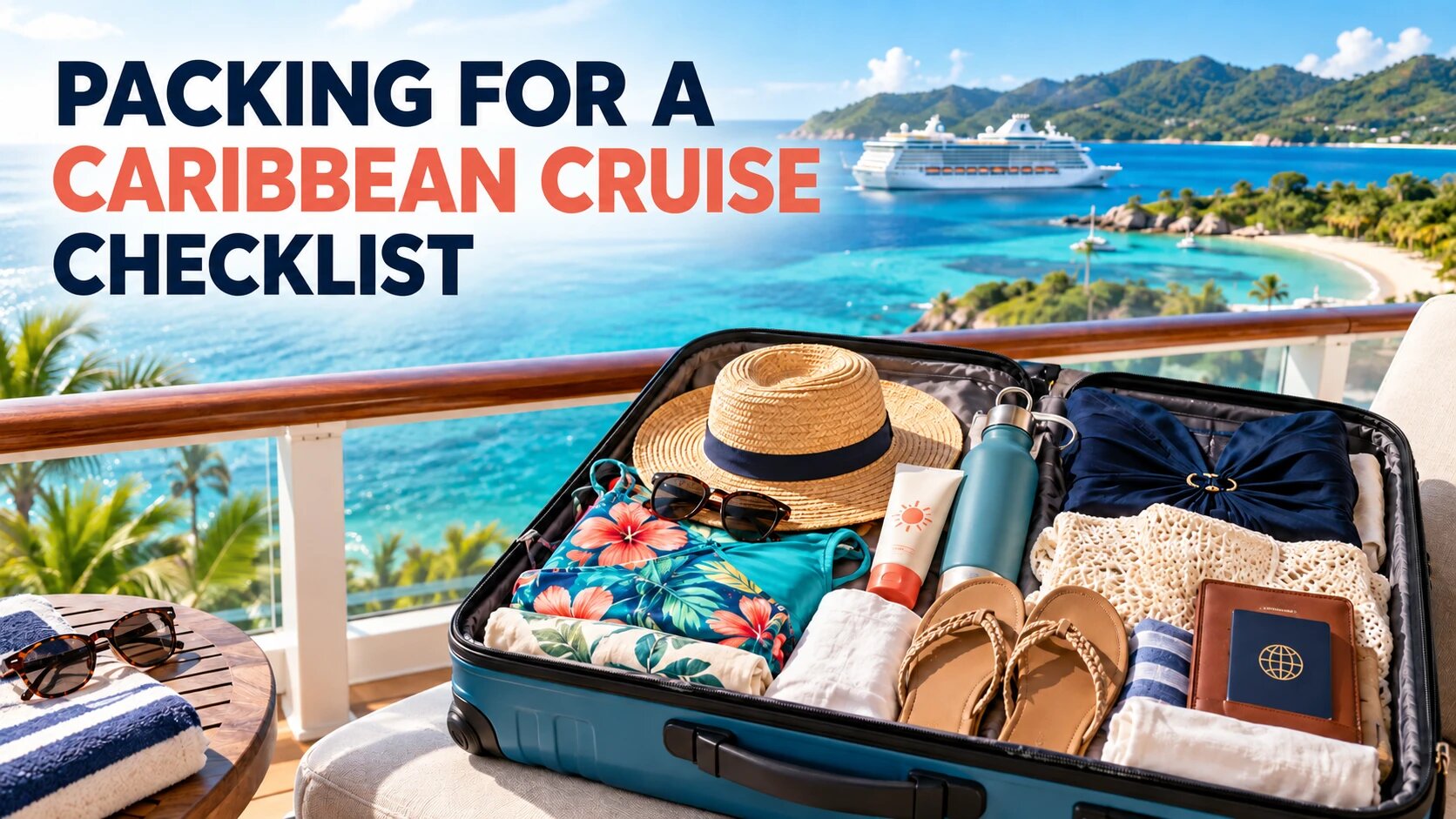
The short version of packing for a Caribbean cruise: bring documents, light breathable clothes, two or three swimsuits, strong sun protection, and one or two evening outfits. Leave heavy clothes, irons, and "just in case" extras at home.
If it's your first sailing, the details are what trip you up. Cabins are small, the ship's air conditioning runs cold, port days mean a lot of sun and walking, and cruise lines have a surprisingly long list of banned items. Here's a checklist covering what to bring, how much, what goes in your carry-on on embarkation day, and what to leave behind. Rules vary by cruise line, so check yours against the general cruise packing list and your line's own guidelines before you finalize your bags.
Caribbean Cruise Packing Checklist: Quick Reference
| Category | What to Pack |
|---|---|
| Documents | Passport, boarding pass and luggage tags, travel insurance info, credit card |
| Clothing | Lightweight tops and shorts, 2–3 swimsuits, cover-up, 1–2 evening outfits, light layer |
| Footwear | Walking sandals or sneakers, flip-flops, one pair of dressier shoes |
| Sun protection | Sunscreen, sunglasses, wide-brim hat, rash guard, after-sun lotion |
| Shore days | Small day bag, reusable water bottle, dry bag, small cash |
| Health | Prescriptions in original bottles, motion sickness remedy, pain relievers, bandages |
| Tech | Phone, charger, non-surge power strip or USB hub (check your line), waterproof phone pouch |
Documents and Money
Keep these in your carry-on, never in checked luggage.
- Passport. Some closed-loop sailings (starting and ending at the same US port) accept a government ID plus a birth certificate for US citizens, but some lines and ports require a passport anyway. Confirm with your cruise line and current CBP guidance. A passport is the safer call. If you miss the ship in a foreign port, you'll need one to get home.
- Boarding documents and luggage tags. Most lines email these ahead of time. Print the tags and attach them before you leave home.
- Credit card. Your cabin key doubles as your onboard charge card, linked to your payment method.
- Travel insurance details and a photo of your passport stored separately from the original.
- Small cash. US dollars are accepted in many popular Caribbean ports, and small bills are handy for taxis, tips, and market purchases, but acceptance varies by island.
My Tip: Take a photo of every document and email the set to yourself. It takes two minutes and saves a lot of stress if something goes missing.
When You Sail Matters
Temperatures are warm year-round, but conditions change. Atlantic hurricane season runs June 1 to November 30, with the rainier, more humid months bringing more showers and occasional itinerary changes. Winter sailings tend to be drier and a bit cooler in the evening. Consider travel insurance for summer and fall sailings, and pack a compact rain jacket either way.
Clothing: How Much to Pack
Cabin closets are tiny, and most ships sell laundry service, often as a flat-rate bag. You don't need a different outfit for every day of a 7-night sailing.
- Daytime outfits: 4–5 lightweight tops and shorts, skirts, or breathable pants
- Swimsuits: 2–3, so one is always dry
- Cover-up: 1–2, for walking from the pool to lunch
- Evening outfits: 2–3, depending on your line's dress code
- Light layer: a thin cardigan, wrap, or light jacket
- Sleepwear and underwear: enough for the trip, plus a couple of spares
- Light rain jacket: a compact one covers an afternoon downpour
Pick fabrics that dry quickly and don't wrinkle badly. Heavy cotton in Caribbean humidity takes forever to dry and feels clammy.
Worth knowing: Even in a hot climate, the ship's air conditioning, the dining rooms, and the breeze on deck at night can feel cool. The light layer is not optional.
Footwear
- Walking sandals or breathable sneakers. Port days often mean cobblestones, hills, and a few miles on foot. Choose something supportive that you've already broken in.
- Flip-flops or slides for the pool deck and beach.
- One pair of dressier shoes for evening, if your line has a dress code.
- Water shoes if your excursions include rocky beaches or river tubing. These are optional but can be useful.
Skip anything new and untested. Blisters on day two of a cruise are no fun.
Sun and Beach Gear
The Caribbean sun is strong, and sea days and beach days add up quickly.
- Sunscreen, broad-spectrum, SPF 30–50. Bring more than you think you'll need, since ship shops mark it up.
- Reef-friendly sunscreen. Some destinations restrict certain ingredients, and rules change. Mineral-based formulas are the usual choice; check your ports before you go.
- Wide-brim hat or a cap that stays on in wind.
- Polarized sunglasses, which help a lot with glare off the water.
- Rash guard, which cuts down on sunscreen and protects your shoulders while snorkeling.
- After-sun lotion or aloe. You'll want it if you misjudge a beach afternoon.
- Compact beach bag or dry bag for towels, phone, and valuables. Ships provide pool towels, but policies on taking towels ashore vary by line, so check yours.
My Tip: Apply sunscreen before you leave the cabin on port days. It's easy to forget when you're rushing to get off the ship.
What to Pack for Shore Excursions
Port days are the part of the trip where your packing choices matter most.
- Small day bag or backpack that zips closed
- Reusable water bottle. Many ships have water refill stations, and you'll drink more than you expect in the heat.
- Waterproof phone pouch for beach and boat excursions
- Quick-dry towel
- Snorkel gear, if you prefer your own. Operators usually provide it, but some travelers like their own for fit.
- Small cash for tips and small purchases
- Motion sickness remedy if you're booking a catamaran or snorkel boat. Some tours run in choppy water.
- Your ship's all-aboard time, written down or screenshotted. Ships leave on schedule, so keep track of it.
Health and Toiletries
- Prescription medications in original containers, plus a few extra days' worth in case of delays
- Motion sickness remedy. Even on a large ship, rough water can catch first-timers off guard. Wristbands, ginger chews, or over-the-counter tablets are all common choices.
- Pain relievers, antacids, antihistamines, and bandages. Ship medical centers charge for visits and supplies.
- Insect repellent for jungle and beach excursions
- Hand sanitizer
- Basic toiletries. Many cabins supply basic soap and shampoo, but this varies by line and cabin class, so bring anything you're particular about.
- Lip balm with SPF
If you take medications for a chronic condition, tell your doctor about your itinerary and ask whether anything about sun, heat, or travel needs adjusting.
Tech and Power
- Phone and charger. Cabin outlets are often limited and sometimes in awkward spots.
- Non-surge power strip or USB charging hub. Many cruise lines ban surge-protected strips for fire-safety reasons and allow non-surge ones, though some ban power strips entirely. Rules vary by line, so check yours before you pack.
- Portable charger for long port days
- Waterproof phone case or pouch
- Offline entertainment: downloaded shows, books, or music for sea days when Wi-Fi is slow or costs extra
- Camera or action cam if you plan to snorkel
Onboard Wi-Fi tends to be pricey and slower than home internet. If you need to stay connected in port, look into an eSIM for travel or your carrier's international plan before you sail.
What to Pack in Your Carry-On for Embarkation Day
Checked bags can take hours to reach your cabin. Keep these with you:
- Passport, boarding documents, and credit card
- A swimsuit and a cover-up so you can hit the pool right away
- Sunscreen and sunglasses
- Medications and a basic toiletry kit
- Phone, charger, and any essentials you can't do without
- A change of clothes for the evening
What NOT to Pack
Rules differ between lines, and confiscated items are usually held until the end of the cruise, so double-check your cruise line's prohibited-items page. Common ones include:
- Irons and clothing steamers
- Candles and incense
- Surge-protected power strips
- Drones, which many lines restrict
- Extra alcohol. Lines differ: some allow a bottle of wine at embarkation, others prohibit outside alcohol entirely.
- Too many shoes and "just in case" outfits. Cabin space is the real limit.
- Heavy jeans and sweaters. They're bulky and usually unnecessary in Caribbean heat.
Build This List in PackMyTrip
Checking this list off from a printed page works, but a cruise itinerary with sea days, port days, and dressier evenings is exactly the kind of variation PackMyTrip's Cruise template is built to handle. Customize it by trip length and itinerary, check things off as you pack, and share it with whoever's sailing with you.

Related Packing Guides
- The general cruise packing list goes deeper on cabin storage tricks, electronics rules, and what's banned onboard.
- Sailing somewhere cooler? The Alaska cruise packing checklist covers the opposite end of the climate range.
- The ultimate packing list covers travel essentials that apply to any trip.
- Need data in port? See the best eSIM for travel.
Which part of cruise packing are you least sure about: the clothes, the shore-day gear, or the ship's rules? Let me know in the comments and I'll update this checklist.
Post Last Updated