

Alaska Cruise Packing Checklist: What to Wear and Bring
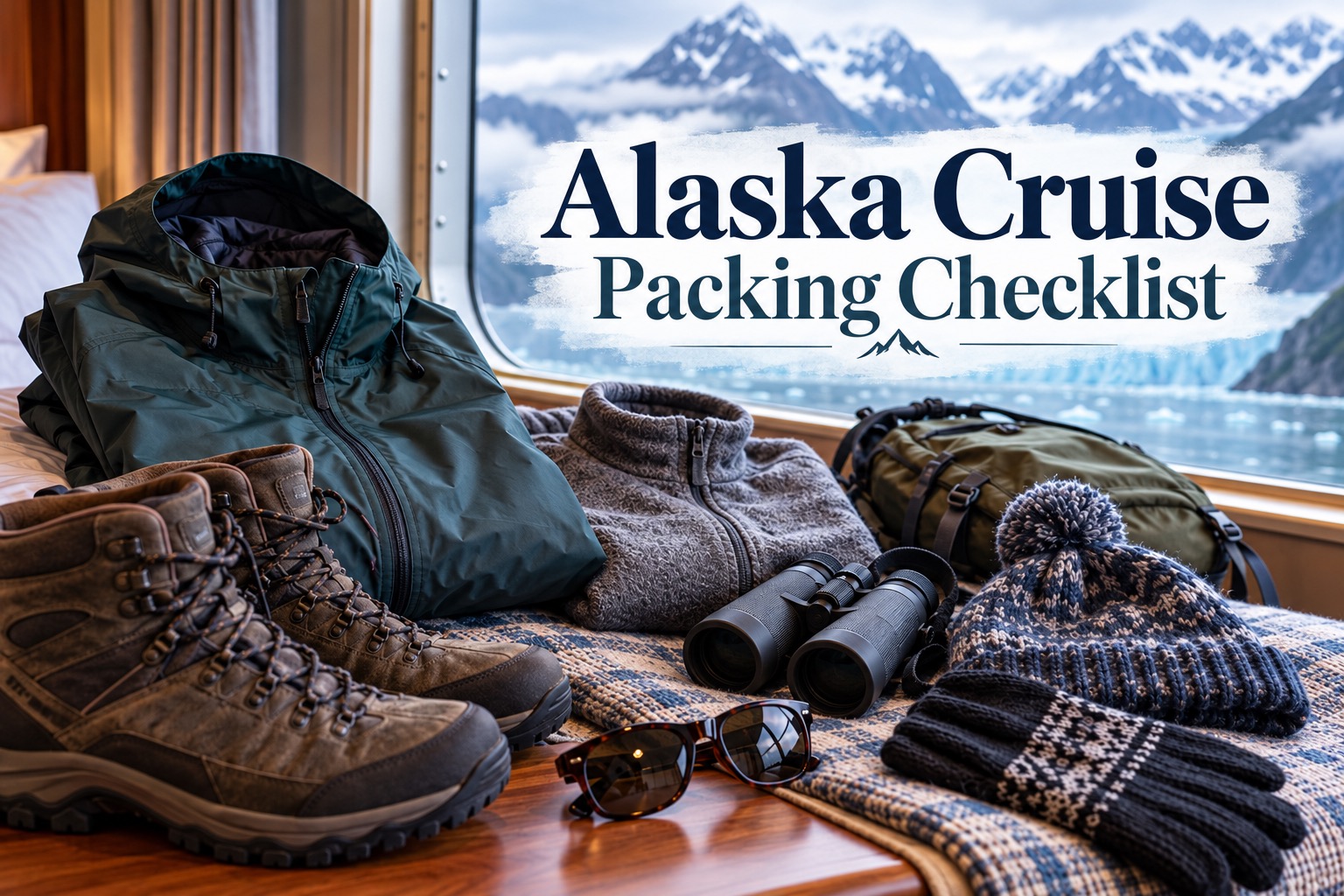
An Alaska cruise packing list shares almost nothing with a Caribbean one. There's no swimwear-and-sandals routine here — the sailing season runs May through September, but "summer" in Southeast Alaska means 50s and 60s°F, regular rain, and cold wind off the water, not beach weather. At the same time, the ship still runs a normal cruise schedule underneath all that: formal or elegant nights, a pool deck (usually empty, but there), and dining rooms with a dress code most nights.
That combination — real layering system on one hand, cruise-ship formal wear on the other — is what trips people up. A generic packing checklist for an Alaska cruise pulled from a warm-weather template will miss most of it. This one covers both sides, plus the excursion-specific gear (binoculars, waterproof layers, real hiking shoes) a standard cruise list won't mention.
Before you start: PackMyTrip has a Cruise trip type you can customize by itinerary and climate, so you're not rebuilding this list from scratch or trying to remember it from a screenshot.
Alaska Cruise Packing List: Quick Reference
| Category | What to Pack |
|---|---|
| Layers | Moisture-wicking base layer, fleece or insulating mid layer, waterproof shell |
| Rain gear | Genuinely waterproof jacket (taped seams), rain pants for excursions |
| Footwear | Waterproof walking shoes or light hiking boots, broken in before the trip |
| Warmth | Hat, gloves, scarf or neck gaiter |
| Optics | Binoculars, camera with zoom capability |
| Sun protection | Sunglasses, sunscreen (glacier and water glare is real even when it's cool out) |
| Formal night | 1–2 smarter outfits for the dining room, check your line's dress code |
| Excursion bag | Daypack, dry bag if your excursion involves water |
| Documents | Passport, boarding documents, small cash for tipping guides |
Why Alaska Cruise Packing Is Different
Two things make this list different from a standard cruise packing list. First, the climate: Southeast Alaska — where most cruises spend the bulk of their port days, including Ketchikan, Juneau, and Skagway — sits in a temperate rainforest. Rain on a port day isn't a possibility to hedge against, it's close to an expectation. Second, the itinerary itself is built around outdoor viewing — glaciers, whales, eagles, and wildlife you're meant to actually see, not just read about on a shore-excursion brochure. That pulls binoculars and real outdoor gear onto the list in a way a Caribbean or Mediterranean sailing never would.
A month-by-month note: peak season (June–August) runs the mildest, typically 55–65°F (13–18°C) in the afternoons, still cool by most standards. Shoulder-season sailings in May and September run cooler and wetter, often dropping into the 40s°F (4–9°C) in the morning and evening. Whichever month you're sailing, pack for the cooler end of that range — a cold, rainy morning at the rail watching a glacier is common regardless of the calendar date.
The Layering System
This is the core of Alaska cruise packing, and it's worth understanding rather than just checking boxes.
Base Layer
A moisture-wicking layer against your skin — a synthetic or merino wool long-sleeve top, not cotton. Cotton holds moisture against your skin once it gets damp from rain or sweat, which is exactly the wrong property for a climate this wet and cool.
Mid Layer
A fleece or lightweight insulating layer goes over the base layer. This is the piece you'll add and remove most often through the day — warm enough for a chilly morning on deck, easy to stuff in a daypack once the afternoon warms up or you head indoors.
Outer Layer
A genuinely waterproof shell, not a water-resistant rain jacket. Look for taped seams and a hood — this is the single most-used piece of gear on the whole trip, worn on nearly every port day and most time spent outside on deck. A fashion raincoat that beads water for twenty minutes and then soaks through won't hold up to a multi-hour excursion in steady Southeast Alaska rain.
Worth knowing: wind on an open deck, especially near a tidewater glacier or while the ship is underway, cuts through layers faster than the air temperature alone suggests. Dress for the wind chill, not just the forecast high.
Clothing by Day Type
Port Days in Town (Ketchikan, Juneau, Skagway)
Waterproof walking shoes, your mid and outer layers, and a small daypack with room for layers you shed as the day warms up. All three towns are walkable, but streets can be wet and occasionally steep, so grip matters as much as waterproofing.
Glacier Viewing (From the Ship or an Excursion)
Dress warmer than the town-level forecast. Air near a tidewater glacier runs noticeably colder than the surrounding water and towns, and if you're on deck for glacier viewing — often early morning, often while the ship is moving — wind chill adds another layer of cold on top of that. Full layering system, hat, and gloves apply here even on a mild-forecast day.
Wildlife-Viewing and Whale-Watching Excursions
Similar logic: you'll likely be on an open boat deck for an extended period, often standing still while watching for whales, eagles, or bears. Cold builds up fast when you're not moving. All three layers plus binoculars earn their spot here — this is the single excursion type where binoculars matter most, since wildlife you're watching for is often too far for the naked eye to appreciate.
Glacier Hiking, Dog Sledding, and Helicopter Excursions
These run colder than anything else on the itinerary, since you're on ice or snow rather than at sea level in town. Thermal base layers, waterproof outer layers, and genuinely waterproof, broken-in boots matter here — this is not the excursion to do in the walking shoes you packed for town.
Kayaking and Water-Based Excursions
Most outfitters provide a drysuit or wetsuit for the water portion, but bring your own quick-dry base layers to wear underneath, plus a dry bag for anything you're bringing along that can't get wet — phone, camera, extra layers for after.
Rainforest and Canopy Tours
Athletic wear and closed-toe shoes with real tread. Some of these excursions (ziplining, rainforest walks) run in genuinely wet conditions even on a dry-looking day, since you're under tree canopy that holds moisture.
Formal or Elegant Nights Onboard
The ship doesn't stop being a cruise ship just because the itinerary is outdoorsy. Most lines still run one or two formal or elegant nights on a 7-night Alaska sailing — check your specific line's current dress code, since these have relaxed over the past several years on some lines (Carnival and Norwegian, for example) more than others. One or two smarter outfits packed alongside all the outdoor gear covers it without needing a full suit or gown.
How Much of Each Layer to Pack (7-Night Sailing)
Cabin storage is limited, and most lines offer laundry service, so there's no need to pack a fresh outfit for every day. As a starting point for a standard 7-night itinerary:
- Base layers: 3–4 — these get worn daily and are the first thing to swap out if one gets damp
- Mid layers (fleece): 1–2 — one worn, one as backup or for laundry day
- Waterproof outer shell: 1 — this is the piece you can't really double up on space for, and one good shell covers every port day
- Rain pants: 1 pair — mainly for excursions rather than everyday wear in town
- Pants/bottoms: 3–4, quick-dry or water-resistant fabric where possible
- Formal-night outfits: 1–2, depending on your line's current dress code
- Socks: Pack more than you think — wet feet from rain or an excursion are common, and dry socks make the rest of the day noticeably more comfortable
Practical detail: pack one complete layering system in your carry-on or day bag for embarkation day, the same way you would swimwear for a Caribbean cruise. Checked luggage can take hours to reach your cabin, and if embarkation day includes any time outside, you don't want to be stuck in travel clothes.
Packing by Port: What Each Stop Actually Calls For
Alaska itineraries vary, but most repeat a handful of ports. Each one leans on a slightly different part of the list above.
Ketchikan
The wettest of the common ports — it sits in a temperate rainforest and gets rain on a large share of days, even in July. Waterproof shell and waterproof shoes matter here more than at any other stop. Excursions often include rainforest walks or ziplining, both of which run in wet conditions regardless of the day's forecast.
Juneau
Home to the most accessible glacier viewing on most itineraries (Mendenhall Glacier, plus helicopter and dog-sledding excursions onto the Juneau Icefield). Dress for glacier-level cold on excursion days specifically — noticeably colder than the town itself. Whale-watching tours also commonly depart from here; pack binoculars and the full layering system if that's on your itinerary.
Skagway
A historic gold-rush town with more hiking and rail excursions (the White Pass Scenic Railway is a common one) than water-based ones. Broken-in walking shoes matter more here than waterproof boots, though a rain shell is still worth carrying — mountain weather changes quickly.
Icy Strait Point / Hoonah
Often the wildlife-focused stop — bear viewing, whale watching, and zipline tours over the forest canopy. Binoculars and a complete base-to-shell layering setup apply, plus closed-toe athletic shoes for the zipline course specifically if that's part of your excursion.
Sitka (on some itineraries)
A mix of Russian-American history and wildlife viewing, often reached by tender rather than docking directly. If your ship tenders at any port, keep your day bag light and your rain shell accessible — you'll be boarding a smaller boat to shore, not walking off a gangway.
Fitting Bulkier Gear Into a Small Cruise Cabin
A layering-heavy packing list takes up more suitcase and cabin space than the warm-weather clothing most cruise packing advice assumes. A fleece, a waterproof shell, and rain pants simply don't compress the way a couple of sundresses do, and standard cruise cabins still have the same minimal closet and drawer space regardless of what you're bringing.
A few adjustments make it manageable:
- Wear your bulkiest items while traveling to the ship rather than packing them — the waterproof shell and any bulky footwear take up the most relative space, so wearing them on travel day instead of folding them into a suitcase frees up real room.
- Compression packing cubes work harder here than on a warm-weather cruise, since fleece and rain gear compress down significantly more than they'd naturally fold.
- Magnetic hooks on the cabin's steel walls solve the "where does a wet rain jacket go" problem — hang it to dry rather than draping it over furniture or stuffing it back in a suitcase damp.
- Use the ship's laundry service partway through the trip rather than packing a full backup of every layer. Most lines offer a flat-rate laundry bag deal, which is usually cheaper than checking a second bag to fit doubled-up cold-weather gear.
Essential Gear Beyond Clothing
- Binoculars — for wildlife viewing, eagles, and glacier calving from a distance most phone cameras can't capture well. This is the one piece of gear a generic cruise list won't tell you to bring, and it's genuinely worth the suitcase space.
- Camera with zoom capability, or a phone with a strong zoom lens — extra batteries or a portable charger matter more here than usual, since cold weather drains batteries faster than normal.
- Sunglasses and sunscreen — worth packing even on a cool, overcast-looking trip. Glare off water and any snow or ice near glaciers is stronger than the air temperature suggests, and it's an easy detail to skip when you're focused on staying warm instead.
- A daypack for excursions, sized for a water bottle, extra layer, camera, and rain gear.
- A reusable water bottle — most ships have refill stations, and it saves buying bottled water on excursion days.
- Motion sickness remedies — the Inside Passage route is calmer than open-ocean crossings, but one-way itineraries that cross the Gulf of Alaska can get rougher. Pack something even if you don't normally need it.
- Lip balm and a heavier moisturizer than you'd normally pack — cool, dry sea air is harder on skin than the humidity of a tropical cruise, and it's an easy thing to forget until your hands or lips are already chapped a few days in.
- Hand warmers — inexpensive, small, and worth having for an early-morning glacier-viewing session on deck or a long wildlife-watching excursion.
Documents and Money
- Passport — most Alaska cruises from Seattle or Vancouver call at a Canadian port, commonly Victoria, BC, making the itinerary a closed-loop international sailing. A passport book is the safest document to bring; check your specific line's requirements before you go, since accepted alternatives (like a passport card) vary by itinerary.
- Printed boarding documents and the luggage tags your cruise line emails in advance
- Small cash for tipping excursion guides and drivers — this is separate from the onboard gratuities already billed to your cruise card, and most excursion guides expect it in cash
- A copy of your passport, stored separately from the original, for excursion days
What NOT to Pack
- A full swimwear rotation — pack one swimsuit if your ship has a hot tub or covered pool, not the five you'd bring for a Caribbean sailing
- Only water-resistant gear — it won't hold up to a full excursion day in steady rain
- New, unbroken-in boots or shoes — the wrong trip to test them for the first time
- Only summer-weight clothing — the biggest mistake on this list. "Summer sailing season" doesn't mean summer weather in Southeast Alaska.
- A single jacket for everything — one shell can't do the job of a base layer, mid layer, and waterproof outer layer combined; the system matters more than any single piece
Build This List in PackMyTrip
Checking this list off from a printed page works, but a cruise itinerary — sea days, port days, excursion days, formal nights — is exactly the kind of variation PackMyTrip's Cruise template is built to handle. Customize it by ship length and itinerary, check things off as you pack, and share it with whoever's sailing with you so you're not each guessing what the other one packed.

Related Packing Guides
This checklist is built specifically around Alaska's climate and excursions. For a broader starting point:
- The general cruise packing list covers cabin storage tricks, cruise line electronics rules, and what's banned onboard — useful regardless of destination.
- The ultimate packing list covers the travel essentials that apply to any trip, cruise or not — documents, electronics, and the basics worth double-checking before any departure.
What's the part of Alaska cruise packing you're least sure about — the layering, the excursion gear, or just how cold it actually gets?
Post Last Updated